
Planning your weekly menu and grocery shopping isn’t what it used to be. Today’s grocery stores offer more choices than ever, and that can make it harder to know what you’re actually buying. Take meat, for example. It’s no longer just a matter of picking up a package of ground beef—you’ll see labels like grass-fed, grain-fed, and pasture-raised lining the shelves.
At first glance, these terms can feel like a collection of buzzwords competing for your attention. But the difference between grain-fed and grass-fed meat is actually quite simple once you break it down. Understanding what these labels really mean can help you make more confident choices the next time you’re shopping for meat.
Let’s walk through it.
Grass-Fed Diets
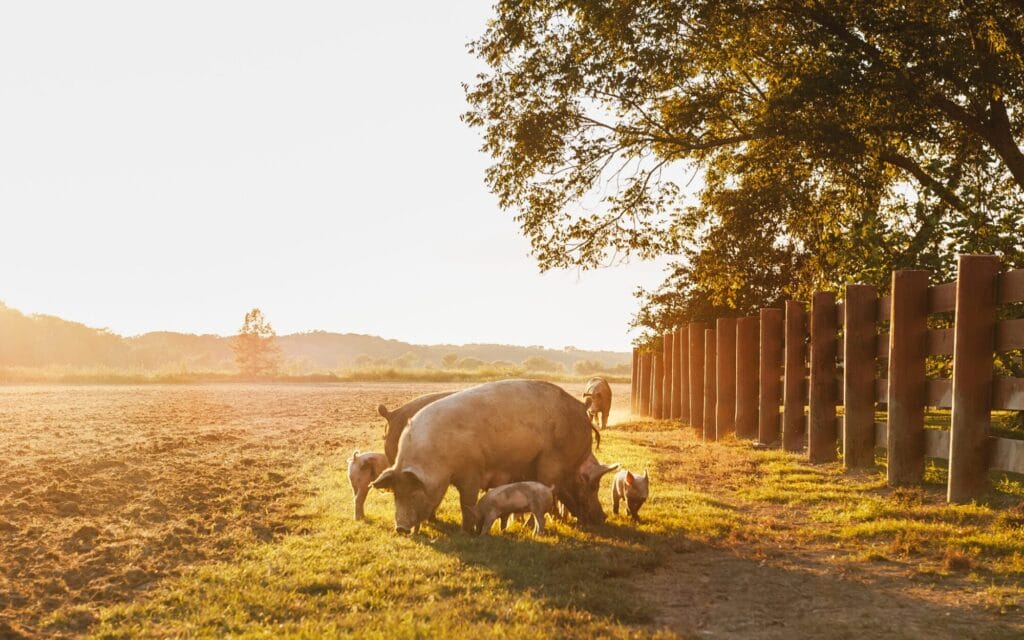
Grass-fed means the animal was raised primarily on a diet of grass and other foraged plants rather than corn or soy-based feed. For cows, this is their natural diet. For pigs, a vegetarian, pasture-forward diet means access to a more varied, natural range of food rather than heavily processed grain rations.
The way an animal is fed affects more than just what’s in its bowl. It also shapes how the animal lives, how it grows, and ultimately what ends up on your plate. Animals raised on pasture often have more space to roam and engage in natural behaviors, which can influence both the quality of life for the animal and the characteristics of the meat produced.
Grain-Fed Diets
Grain-fed means the animal was raised on a diet primarily made up of grains, most commonly corn and soy. This became the dominant farming method in the U.S. largely because it’s efficient and cost-effective. In fact, grain-fed production is so common that approximately 80% to 95% of beef cattle in the United States are finished on a grain-heavy diet.
Grain-heavy diets cause animals to gain weight faster, which shortens the time from farm to shelf and helps keep prices down. That’s why grain-fed meat has been the default in most grocery stores for decades. While grain-fed meat isn’t inherently bad, the way these animals are raised results in meat that differs from their grass-fed counterparts.
The Nutritional Differences
Here’s where it gets interesting for the health-conscious crowd.
Grass-fed meat tends to have a better balance of healthy fats. Specifically, it contains more omega-3 fatty acids compared to grain-fed meat. Grain-fed animals, especially those raised on corn-heavy diets, tend to produce meat with higher levels of omega-6 fatty acids. Both are essential, but most people already get plenty of omega-6 in their diet. Getting more omega-3 is usually the goal.
Grass-fed and pasture-raised meats also tend to have higher levels of conjugated linoleic acid, or CLA, which is a naturally occurring fat that has been linked in research to a range of health benefits. And they’re generally richer in antioxidants like Vitamin E, which supports immune function and overall cell health.
This applies across the board, from grass-fed bacon to uncured beef franks to deli meats. When the animal eats better, the meat reflects that.
What About Flavor?
Grass-fed meat often has a slightly more complex, richer flavor than grain-fed. Grain feeding, particularly with corn, tends to produce fattier, milder-tasting meat. This is why it became the industry standard in the first place. It’s consistent and approachable.
But many people who make the switch to grass-fed products, whether that’s Wellshire’s Applewood Smoked Bacon, Black Forest Ham, or Sugar Free Uncured Beef Franks, find they actually prefer the taste. There’s more depth to it. It tastes like what meat is supposed to taste like.
The Animal Welfare Piece
This one matters to a lot of people, and for good reason. Grass-fed animals typically spend more time in open pastures rather than confined feeding operations. Grazing is natural behavior, involving movement, space, and a less stressful life overall.
At Wellshire, humanely raised means animals are vegetarian-fed and never given antibiotics or growth hormones. Whether you’re picking up Maple Bourbon Bacon or Turkey Bacon, a delicious alternative to pork bacon, you can feel good knowing the animals behind those products were raised with real care.
And the Environment?
Grain feeding, especially large-scale corn farming, requires significant land, water, and energy. Pasture-raised and grass-fed systems, by contrast, can actually support healthier soil and more balanced ecosystems when managed responsibly. It’s not a perfect equation, but choosing grass-fed is generally considered the more sustainable option, and that’s increasingly important to shoppers who think beyond the meal in front of them.
So, Which Should You Choose?
If eating well is a priority for you, grass-fed is worth the reach on the shelf. The nutritional advantages are real, the farming practices are more humane, and the environmental footprint tends to be smaller. And with brands like Wellshire making grass-fed accessible across a wide range of everyday products, you don’t have to overhaul your whole diet to make a meaningful shift.
Eating better doesn’t have to be complicated. Sometimes it’s just about knowing what to look for and making one good choice at a time. Ready to make the switch? Wellshire products are available at Whole Foods and other retailers nationwide. Use our store locator to find grass-fed bacon, hot dogs, deli meats, ham, sausage, and more at a grocery store near you.