
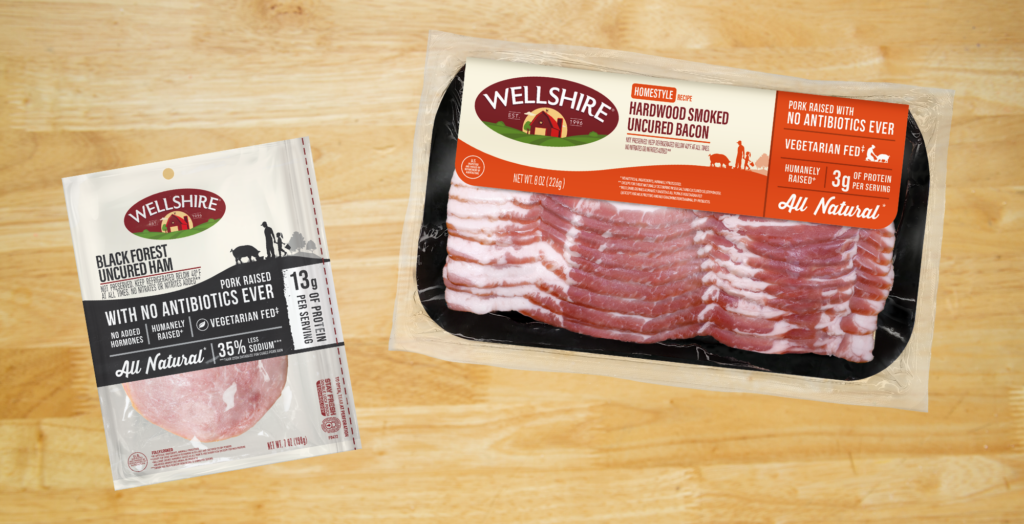
Natural. Organic. Uncured. Humanely raised. Grass-fed. No antibiotics ever.
The meat aisle offers plenty of information, but understanding what those words actually mean can be another story. Some terms are tied to specific government standards, while others describe production practices or dietary attributes. And no single claim tells you everything about a product.
Learning how to read meat labels can make shopping much simpler. Instead of choosing based on one eye-catching phrase, you can compare ingredients, nutrition, sourcing, certifications, and production practices to find products that fit your family’s priorities.
Here’s what some of the most common meat label terms really tell you.
Why Meat Labels Matter
A meat package can communicate several different kinds of information at once: what’s in the product, how it was produced, its nutritional profile, potential allergens, and how the animal was raised.
The important thing is knowing which claims mean what.
For example, USDA defines “natural” meat and poultry as containing no artificial ingredients or added color and being only minimally processed. Products making the claim should also explain what “natural” means on the label.
Other animal-raising claims, such as “Raised Without Antibiotics,” “Grass-Fed,” and “Free-Range,” are voluntary claims that USDA says should be supported by documentation.
The takeaway? Look at the whole package, not just the biggest words on the front.
What Does “All Natural” Mean on Meat Products?
For meat and poultry, “natural” generally means minimally processed with no artificial ingredients or added color. Minimal processing means the process has not fundamentally changed the product.
However, “natural” doesn’t tell you everything about how an animal was raised or fed. A natural claim alone, for example, isn’t the same thing as an organic certification.
Natural vs. organic
USDA Organic is a separate, certified standard. Organic livestock must receive organic feed, and USDA standards cover antibiotics, hormones, living conditions, outdoor access, and pasture access for ruminants.
So, when comparing natural products, turn the package around. The ingredient list and additional production claims can give you a much fuller picture.
What Does “Organic” Meat Mean?
USDA Organic isn’t simply another way of saying natural.
Livestock sold as organic must be managed according to USDA organic requirements. Among other rules, livestock receive organic feed; organic management prohibits antibiotics and hormones; and standards apply to living conditions and outdoor access. Ruminants also have specific grazing requirements.
For multi-ingredient foods, products labeled “organic” must contain at least 95% certified organic content, while products labeled “made with organic” must contain at least 70%.
Does organic automatically mean a product has the nutritional profile that’s right for you? Not necessarily. You’ll still want to compare sodium, saturated fat, protein, added sugars, and serving sizes.
What Does “Uncured” Mean?
“Uncured” can be one of the more confusing labels on products such as bacon, ham, and hot dogs.
Traditionally cured meat may use sodium or potassium nitrite or nitrate. Some products instead use ingredients that naturally provide nitrite, such as celery powder. Under current USDA labeling rules, certain products made this way are labeled “uncured” and carry qualifying language explaining that no nitrates or nitrites were added except those naturally occurring in the named source.
In other words, “uncured” does not necessarily mean nitrate- or nitrite-free.
You can read about Wellshire’s own approach to cured and uncured meats, including its use of alternative ingredients such as celery powder, Swiss chard, and sea salt.
Understanding “No Nitrates or Nitrites Added”
Nitrates and nitrites have traditionally played a role in curing meats, helping with preservation and other product characteristics.
If natural sources of nitrite are used, qualifying wording matters. A package might say “no nitrates or nitrites added except for those naturally occurring in cultured celery powder”, for example. USDA guidance specifically recognizes this type of labeling.
Instead of stopping at the front-of-package claim, check the ingredient list to understand which curing ingredients the product actually contains.
What Does “Raised Without Antibiotics” Mean?
A raised-without-antibiotics claim describes how the animal was raised, not simply whether antibiotic residues are present in the finished meat.
USDA permits no-antibiotics claims when producers provide sufficient documentation demonstrating that animals were raised without antibiotics.
That’s different from conventional animals that may receive approved antibiotics. Those animals are subject to withdrawal periods before slaughter so residues decline to legal levels, and FSIS operates residue-testing programs.
So “raised without antibiotics” communicates a production choice beyond the residue safeguards that apply to the wider food supply.
Understanding “No Added Hormones”
Read this claim in the context of the animal species.
Hormone rules aren’t identical across beef, pork, and poultry. Certain hormone implants may be used in beef cattle, while steroid hormone implants for growth are not approved in poultry. USDA labeling guidance therefore requires appropriate substantiation or qualifying language depending on the species and claim.
Rather than treating “no added hormones” as one universal standard, look at what type of meat you’re buying and exactly what the package says.
What Does “Humanely Raised” Mean?
For shoppers concerned about animal welfare, “humanely raised” can be an important consideration. The practices behind such claims may address areas such as housing, handling, outdoor access, transportation, feed, and living conditions.
Animal-raising claims are voluntary, and USDA updated its guidance in 2024 to strengthen recommendations for documentation supporting these claims.
Look for brands that clearly explain what their welfare terminology means, rather than relying on the phrase alone. Third-party certifications can provide another layer of verification when applicable.
Vegetarian-Fed, Grass-Fed, and Grass-Finished: What’s the Difference?
These terms describe different aspects of an animal’s diet.
Vegetarian-fed generally indicates a feed program without animal-derived feed ingredients, according to the standard or claim being used. It does not automatically mean grass-fed.
Grass-fed refers to a feeding practice associated primarily with ruminants such as cattle. Grass-finished is commonly used to communicate that the animal continued on a forage-based diet through the finishing stage rather than switching to a grain-based finishing diet.
Because animal-raising claims can have specific definitions or standards behind them, look for explanatory language or certification rather than assuming similar-sounding terms mean the same thing.
Free-Range, Cage-Free, and Pasture-Raised
These terms relate to an animal’s living environment, but they aren’t interchangeable.
“Free-range” generally communicates some form of outdoor access and is particularly relevant to poultry. “Cage-free” addresses confinement without necessarily guaranteeing outdoor access, while “pasture-raised” generally signals access to pasture under the standard being used.
Again, the standard behind the words matters. Look for specific explanations and credible third-party certifications when animal living conditions are an important purchasing priority.
Gluten-Free and Other Dietary Claims
Fresh, single-ingredient meat is naturally free of gluten, but processed meats may contain seasonings, marinades, flavorings, or other ingredients.
FDA’s gluten-free standard requires foods carrying the claim to meet defined criteria, including having less than 20 parts per million of gluten from unavoidable presence.
If you have dietary restrictions, don’t stop at “gluten-free.” Check allergen information and claims such as dairy-free or soy-free as relevant to your needs.
Wellshire’s product finder lets shoppers filter products by dietary attributes including gluten-free, dairy-free, lactose-free, corn-free, nut-free, pepper-free, and soy-free.
Understanding the Ingredient List and Nutrition Facts
Sometimes the most useful information is on the back of the package.
Ingredients are listed in descending order by weight. That list can help you spot seasonings, sweeteners, preservatives, curing ingredients, and other additions.
A shorter ingredient list may appeal to shoppers looking for minimally processed foods, but shorter doesn’t automatically mean better. What those ingredients are matters more than simply counting them.
Next, compare the Nutrition Facts panels of similar products. Pay particular attention to:
- Serving size
- Calories
- Protein
- Total and saturated fat
- Sodium
- Added sugars
Always compare equivalent serving sizes. A product that initially appears lower in sodium or calories may simply list a smaller serving.
Understanding Meat Certifications and Seals
A certification is different from a general marketing statement.
The USDA inspection mark indicates that meat or poultry has undergone the applicable federal inspection process. USDA Organic, meanwhile, indicates compliance with certified organic production standards. Third-party programs may independently verify animal welfare, gluten-free status, or other specific attributes.
A useful question whenever you see a seal is: Who sets and verifies the standard?
That helps distinguish an independently verified certification from a company’s own descriptive claim.
Common Meat Label Claims at a Glance
| Claim | What to remember |
| Natural | No artificial ingredients or added color; minimally processed |
| Organic | Certified to USDA organic production requirements |
| Uncured | May still contain naturally occurring nitrate/nitrite sources |
| No nitrates/nitrites added | Check for qualifying language about natural sources |
| Raised without antibiotics | Describes how the animal was raised |
| No added hormones | Meaning and labeling context vary by species |
| Humanely raised | Check the specific standard behind the claim |
| Vegetarian fed | Describes feed, not necessarily outdoor access |
| Grass-fed | Describes a ruminant feeding practice |
| Pasture-raised | Look for the defined standard and certification |
How to Compare Two Meat Products at the Grocery Store
When two packages look equally appealing, use this simple seven-step check:
- Compare the same type of meat and serving size.
- Read the full ingredient lists.
- Compare protein, sodium, saturated fat, and added sugars.
- Review animal-raising and production claims.
- Look for relevant certifications.
- Check allergens and dietary requirements.
- Prioritize the attributes that matter to your household.
This approach gives you more useful information than judging either product by a single claim on the front.
Questions to Ask When Buying Meat
Before adding a product to your cart, consider:
- How was the animal raised and fed?
- Were antibiotics used during raising?
- Is a hormone claim meaningful for this particular species?
- What curing ingredients are included?
- Does the product contain added water?
- Are artificial ingredients or preservatives present?
- Does it meet your household’s dietary needs?
- Are the claims clearly explained or independently certified?
You don’t need every product to check every possible box. You simply need enough information to make the choice that works for you.
Choosing Meat That Fits Your Family’s Priorities
No single label makes a meat product the “best” choice for everyone.
One household might prioritize simple ingredients and allergen information. Another may care most about animal welfare or organic certification. Others may focus on protein, sodium, budget, convenience, or finding something everyone at the dinner table will actually enjoy.
Knowing your priorities makes all those labels much easier to navigate.
How Wellshire Approaches Meat Quality and Transparency
At Wellshire, transparency starts with telling shoppers what goes into the food and explaining the standards behind the package.
Wellshire describes its products as all natural, meaning no artificial ingredients and minimally processed, and states that its animals are raised without antibiotics and that its products use minimal, real ingredients. The brand also defines terms such as “Humanely Raised” and “Vegetarian Fed” on its standards page.
Because individual products can have different ingredients, certifications, and dietary attributes, the label of the specific product remains important.
Explore Wellshire’s uncured bacon, deli meats, uncured hot dogs, and other all-natural meat products to compare the options that fit your family’s needs.
Read the Label, Know Your Priorities
Meat labels become much easier to navigate once you know what the terminology actually communicates.
Look beyond a single front-of-package claim. Read the ingredients. Compare the Nutrition Facts. Understand the production standards and certifications behind the words. Then choose according to what matters most at your table.
Ready to put your label-reading skills to work? Explore Wellshire products and find simple, thoughtfully made options for your family’s next meal.